

GP EES Series











About our company
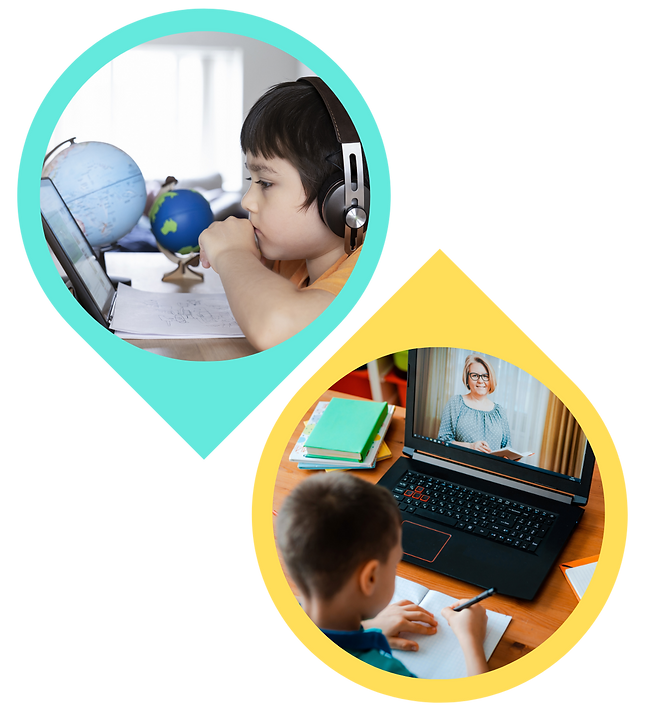
GP EIS was established to provide high-quality education for non-English speaking students. We provide ESL (English as a Second Language) courses so that students can take classes as if they were really there in the classroom with a native speaker. We work digitally to connect students with teachers in native English speaking countries such as the USA, UK, Canada, and Australia. Our teachers are trained to use our bespoke curriculum and prepare students for the TOEFL standardized test, an international benchmark of English proficiency.
Cutting-edge systems in private education usually come at a high cost to the parent. However, we believe that a high-quality education should be available to all. Therefore, our focus is to provide students around the world with affordable online course content and printed materials packages designed using fresh and exciting approaches to ESL. Our content and methodology employ the very latest findings in academic research on language learning, pedagogy, and child development.


Speaking
Phonics
Communication
Reading
Writing
Essays


Focus on the phonemes and unique sounds of the English language that will ensure students will receive the best methodology in English language fluency.
Speaking & Phonics
Materials designed to develop reading and writing English at an exponential rate compared to traditional methods, using stories and drama.
Communication & Reading
Learning critical thinking, article assessment, opinion writing and debate skills through subjects such as history, science, and social studies.
Writing & Essays

Phonics (1 year, 4 books)
Communication
(1 year, 4 books)

Reading (1 year, 4 books)

Writing (1 year, 16 books)

Essays (1 year, 4 books)

Speaking (1 year, 16 books)


Course Materials


Engaging the students in fun and exciting learning activities that combine language and art. Students will be encouraged to exercise their creative thinking when completing art projects. This exercise will help them solidify words and sounds in their mind as they link images and sounds to letters and words.
Speaking


Idea

The goal is to help students learn the important link between an image (such as a picture) and the English vocabulary for the verb, noun, or adjective. This is how students will gradually acquire new vocabulary in the target language.
Objectives
Format
Skills
Homework
There are 208 main keywords throughout 16 books. Students will learn the vocabulary of more than 1300 related words. In addition, drawing activities will challenge students to recall the keywords and draw them to help them build the mental association between the word's idea and the vocabulary for it.
Students will be learning vocabulary memorization skills by developing their creativity and artistic talent through self-expression and discussion with their teachers.
Students will draw the keywords from their learning materials and translate the word from their language into English to help them memorize the target vocabulary.


Learning phonics is required to accurately speak and listen to any language. By familiarizing students with the sounds of the language, they will be learning step by step. These steps are required for them to not only recognize language, but reproduce it like a native speaker does.
Phonics
Idea
Objectives
Format
Skills
Students will engage with learning the phonemes of the English alphabet through guided exercises showing mouth and tongue positions in order to apply the correct sounds. Students will also learn the correct stroke order for each letter (lowercase and uppercase) as an introduction to writing.
Students will be able to demonstrate their knowledge of the English alphabet both written and spoken. The students will also begin to develop confidence in public speaking by repeating the letters together with other students and singularly.
To educate the students on the basic fundamentals of the English language through exploration of the alphabet. Practicing the correct sounds used for each letter and linking those to key words that will be practiced through all levels of the curriculum.
Homework
Further practice will be completed at home in addition to learning both Korean and English versions of the key words associated to each letter of the alphabet.


Students begin their journey of speaking English words and sentences with word puzzles aimed at improving their pronunciation and verbal communication skills. Using keywords derived from each letter of the alphabet and introducing related vocabulary to expose students to new word families.
Communication
Idea
Objectives
Format
Skills
Students will complete 52 worksheets every 3 months, comprised of two Word Search and Word Match exercises per week, split over two 40-minute lessons. Learning through repetition in class-based activities guided by a teacher.
Students will be able to pronounce each word covered in the worksheets to a high standard.
Form basic sentences by understanding how connecting words forms those sentences.
To train students in the phonemes of the English language. Introduce and develop the students' pronunciation of vocabulary by using repetition of keywords and related vocabulary, with an emphasis on how words are related to one another.
Homework
Each worksheet is duplicated with an emphasis on repetition. Korean elements aid to guide the student into being able to identify the words and to practice with their parents at home.


This level practices reading as an active skill with critical thinking. Grammar, word forms, sentence structure, and extended passage readings with comprehension questions and personal writing activities. Students will be introduced to new themes, topics, and related vocabulary used in context.
Reading
Idea
Objectives
Format
Skills
Students will complete 52 worksheets every 3 months, comprised of Sentences and Reading exercises per week, split over two 40-minute lessons. Learning through repetition in class-based activities guided by a teacher.
Students will be able to recognize and correctly use words in different grammatical forms, construct new sentences, read longer passages, identify and outline the structure of a piece of writing, comprehend information presented in a passage, and reflect on personal opinions through writing topics.Form basic sentences by understanding how connecting words forms those sentences.
To introduce and practice word forms, grammatical changes, sentence structure, long-form reading through passages and reading comprehension activities to practice active reading techniques, such as identifying the thesis, main ideas, and details of a passage.
Homework
Memorizing the topic vocabulary and a verbal test will be delivered in class. Speaking practice, by explaining the topic, main idea, and major details of the reading to the teacher in a verbal presentation.


Capturing student's interests through storytelling to introduce and build on creative writing skills. Using characters' perspectives to encourage expression of thoughts, emotions, and motivations in English. Discussions and performances are used to reinforce understanding and critical thinking.
Writing
Idea
Objectives
Format
Skills
Students will complete 8 Fairy Tale stories per one year. Two stories will be covered over three months divided into two 40-minute lessons per week. Learning through engaging content by introducing recognizable stories to the students in bite-sized portions with written exercises.
Students attain the ability to identify the components in story telling and individual story elements (settings, characters, themes). They will also be able to undertake short creative writing activities, both individually and through group projects by discussing story elements together.
To introduce literary texts and fiction reading, character and plot analysis, and creative team-based projects such as opinion writing, acting, and speech presentation.
Homework
Writing story reviews, character's perspectives, and opinion writing to present in class as verbal presentations.


At this level, students will be exposed to non-fiction articles that introduce a variety of topics in history, science, and culture. These will introduce advanced vocabulary and provide opportunities for students to develop their own critical thinking and writing skills, through essay writing and debating.
Essays
Idea
Objectives
Format
Skills
Students will complete 28 topics per year, with 7 topics per 3 months comprised of article reading and skills exercises per week split over two 40-minute lessons. Essay writing and debating in groups during lessons guided by a teacher.
Students will be able to reflect on a variety of real-world topics and issues using their own thoughts and opinions. They will acquire more advanced vocabulary and develop their reading, writing, and debating skills to a more advanced level of proficiency.
To introduce non-literary texts through written articles and practice critical thinking and writing skills through longer form non-fiction. Critically approaching topics such as history, the sciences, and culture to introduce more advanced vocabulary and grammatical structures. To practice essay writing and debate.
Homework
Memorizing the topic vocabulary. Practicing the topic summaries and personal opinion writing as a speech, with a listening and speaking test in class.


Phonics & Speaking
through
Art
Mind maps and art projects enhance the Phonics and Speaking elements of the curriculum.
Writing
through
Discussion
Further discussion topics using components from popular stories to actively engage critical thinking and writing skills.
Essays
through
Debate
Additional debate topics stimulated by newspaper articles with students taking a for and against position.
Communication & Reading
through
Thinking
This curriculum develops the ability to listen, speak, read and write through various topics and sentences by using communication and reading activities.


Students are introduced to the keywords that are used throughout the curriculum. They will begin their journey with creative thinking and art activities related to those keywords.
As students deepen their relationship with the keywords, they will continue to recall words more quickly and accurately as a result of the visual art activities they are engaged with.
Throughout the word sheets, there are images related to the keywords and related word families to deepen students' understanding of how images and words correlate together.
The difficulty level of the material is raised in order to keep the material challenging and stretch the students beyond their comfort zone which stimulates further learning.


Art
Phonics & Speaking
By integrating art activities into the English learning process, it becomes more engaging to learn and increases student participation. Children are more interested in learning when it is fun, and we are able to do this by linking English with visual and musical arts that are exciting for students.
Phonics & Speaking, Books 1 to 4

Phonics & Speaking, Books 5 to 10
Comm. & Speaking, Books 5 to 10
Comm. & Speaking, Books 11 to 16

Thinking

Communication & Reading
By using effective communication and reading activities, our curriculum develops the students' ability to listen, speak, read and write. Through a wide range of topics, students will learn how to think critically and apply these ideas in their studies.

These lessons introduce word match and word search exercises that encourage students to talk about the words with the teacher in a free-form talking format.
Students progress to creating sentences based on the words they've learned in the prior stage of the curriculum, with matching exercises such as gap-filling activities.
Students begin to practice sentences and short paragraphs, learning how to read and write through a range of fun topics that also teach them new related vocabulary.
As students deepen their practice of sentences and reading, they learn how to identify the main points of a short piece of writing and write their own personal opinions.
Communication Books 1 to 6
Communication Books 7 to 12
Reading Books 1 to 6
Reading Books 7 to 12


Discussion
Writing

We build on the writing curriculum by introducing discussion topics related to popular children's stories that are thought-provoking. Here we develop the students' analytical thinking and opinion writing skills by asking them to write short answers that express their thoughts about themes in the texts.

Students are introduced to the main elements of storytelling and fiction, such as setting, plot, characters, and emotions. They start to think about how these things are expressed.
Students are introduced to famous historical figures that enrich their understanding of history. This also introduces vocabulary and stimulates discussion and writing topics.
As students continue to deepen their studies in both storytelling and famous figures, they'll develop a broader ability to express their opinions on these topics in their own words.
Through collaborative group projects and dramatic engagement such as acting and performing short scripts, students are able to demonstrate all the skills learned so far.
Writing Book - Semester 1
Writing Book - Semester 2
Writing Book - Semester 3
Writing Book - Semester 4


Students begin to understand the logical flow of information as presented in an article. They start to think about how to condense the key points into their own summaries.
Students deepen their understanding and comprehension of written articles. They begin to structure their summaries into verbal speeches, developing presentation skills.
Students start to think collaboratively with other students about their own thoughts and ideas on debate topics. Formulating and delivering arguments becomes the main focus.
Students are now more familiar with the processes of writing and speaking their ideas, so they are prepared for formalized debates on a variety of ethical and social topics.
Debate
Essays
Students practice their debating skills with short-form essay writing. They are asked to present their ideas on popular topics in which they can take a stance for or against. Students will also practice their public speaking skills by presenting in front of their classmates.
Essays Book - Semester 1
Essays Book - Semester 2
Essays Book - Semester 3
Essays Book - Semester 4





I am thrilled to be working with GP EIS to enable students from all over the world to learn English from excellent native English speaking teachers. I want to introduce you to friendly teachers from native English speaking countries. I hope that the students enjoy learning with our teachers and that they continue to develop and grow with GP EIS.
Christopher Lucas - Managing Director

I am excited to be leading the design and writing of GP EIS's education curriculum. I am passionate about international students of English and want to see students of all ages succeed in learning their second language. I am very proud of the work we have done to create a fun and engaging curriculum, and I hope our students will enjoy taking lessons with us.
Zac Phoenix - Education Director

My passion is for music and the creative arts, so I am very happy to be working with GP EIS to develop learning materials that include elements of music, storytelling, and animation. I believe that students learn more effectively when they're excited about the content they're engaged with. I know that students are going to love our creative curriculum!
James Patterson - Creative Director

UK Headquarters
GP Consultant
40 minutes, once a week consulting
1:1 Student Guidance
UK Headquarters
GP Native
40-minute lessons, twice a week
Maximum class size: 4 students
TOEFL Junior
TOEFL
GP EIS's level test,
taken once every 3 months